Coastal Sagebrush
Scientific: Artemisia californica
Common: Coastal sagebrush
Español: Romerillo
Chumash ('alapkaswa'): we’wey
This plant is used to make the foreshaft of arrows and to construct windbreaks and barricades around dance grounds. Medicinal uses include the treatment of headaches by tying the leaves on the forehead or rubbing the leaves between hands in water, then using it to wet the hair and head. Wearing the leaves in a hat made the head feel cool. Boiling the plant and inhaling the steam was thought to be a treatment for paralysis. Water boiled with the leaves was thought to be a poison oak remedy. In more recent times, the plant was used as a cough remedy.
Sagebrush could be used ritually to bless a new pipe by sprinkling water in four directions with a sprig of the plant. When someone died, many branches of the plant were placed around a home as a disinfectant, and the plant was also burned as an incense to fumigate a house after a funeral. The plant was also used to burn the belongings of a deceased person after burial, and relatives purified themselves with water in which the plant had been soaked. If a widow or widower feared seeing visions, the smoke of this plant and tobacco (Nicotiana) was blown over the patient’s full body, and sagebrush sprigs were placed under the patient’s head during sleep. Sagebrush bundles were offered at shrines during the winter solstice.
Source: Chumash Ethnobotany: Plant Knowledge Among the Chumash People of Southern California by Jan Timbrook
'alapkaswa' refers to the local Chumash dialect spoken at the kaswa’ village near modern Hope Ranch.
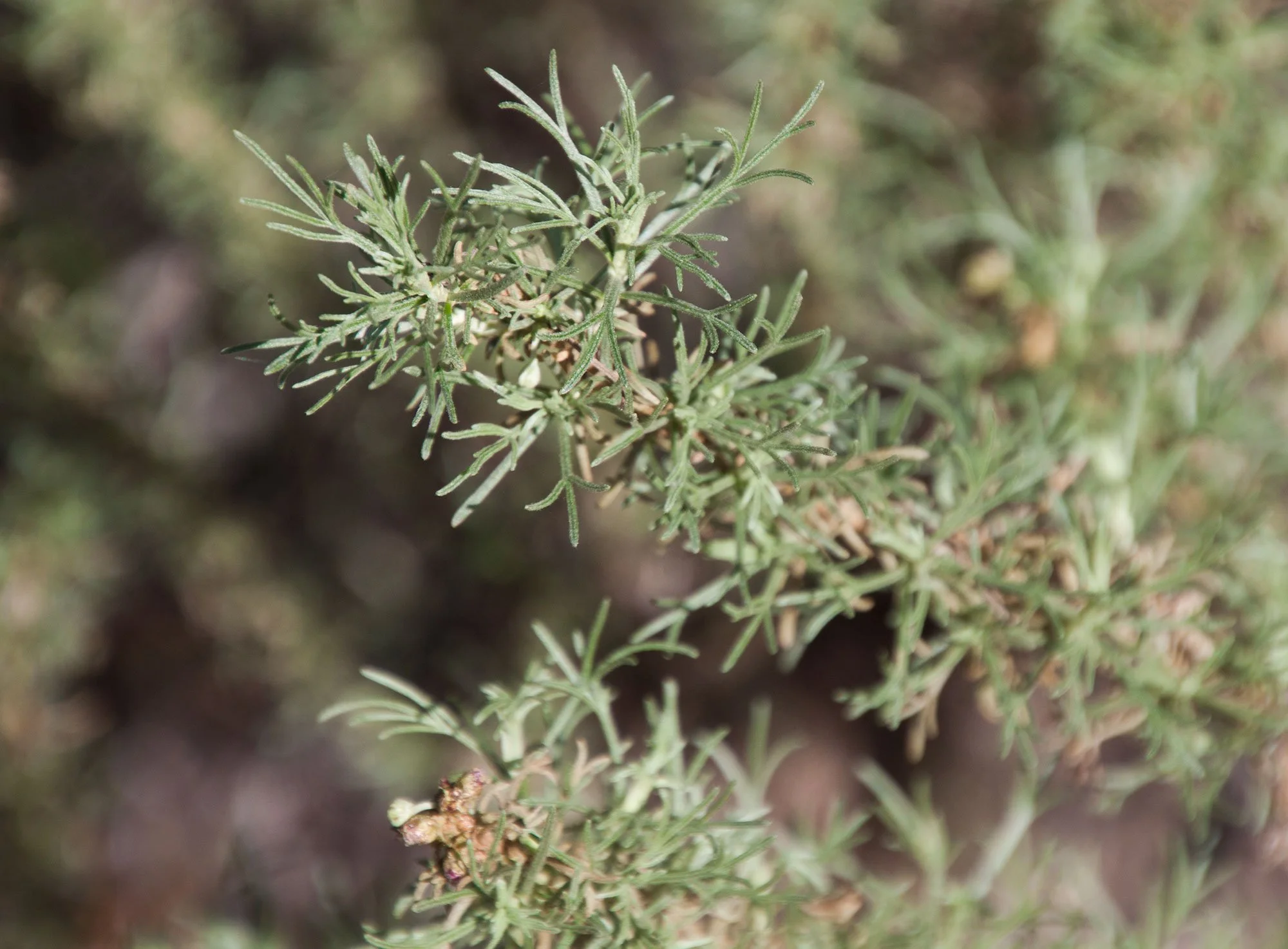
Coastal sagebrush - (Artemisia californica)
Coastal sagebrush - (Artemisia californica)
Coastal sagebrush - (Artemisia californica)