
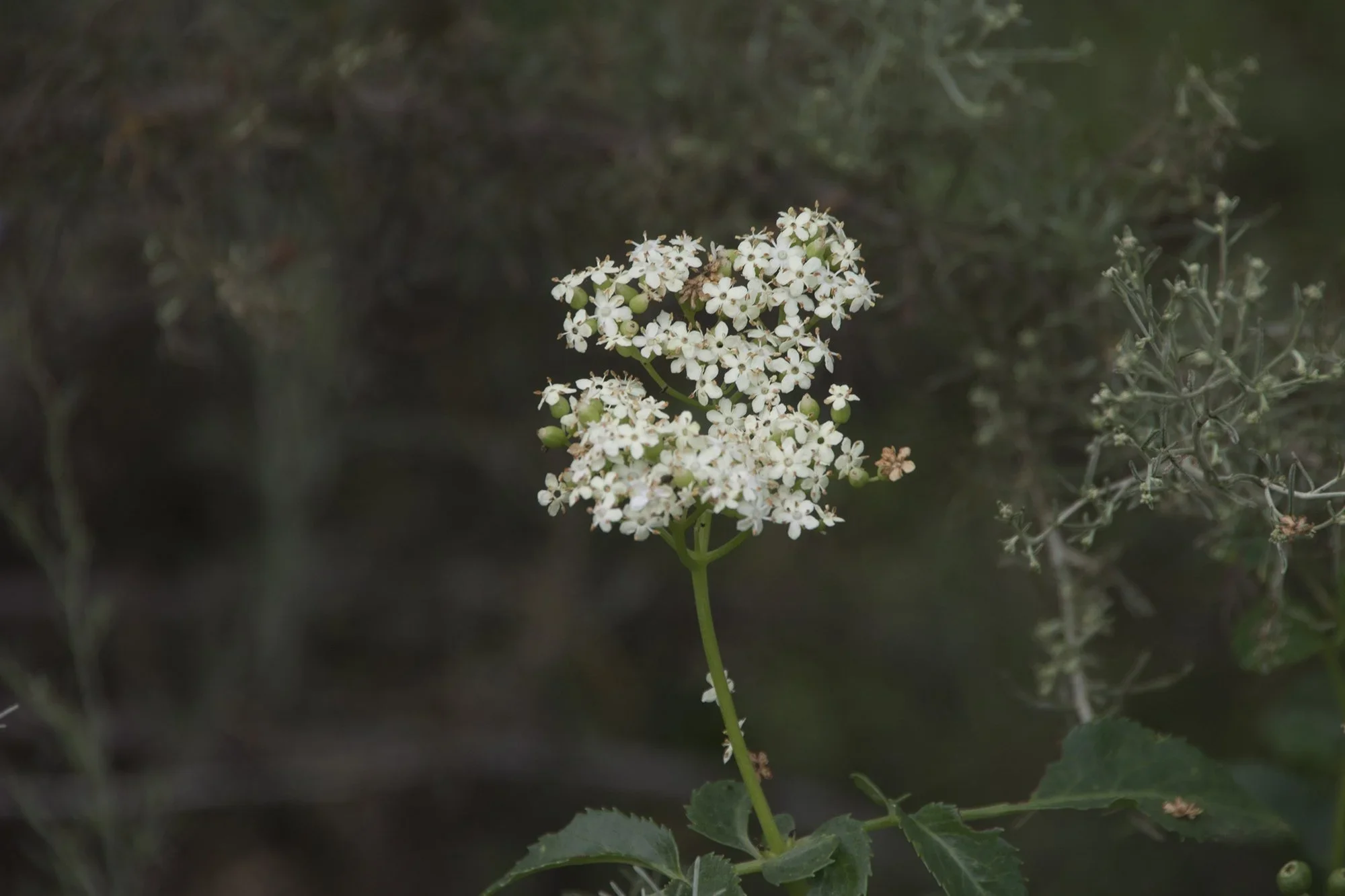
Blue Elderberry
Scientific: Sambucus nigra ssp. caerulea
Common: Blue elderberry
Español: Saúco
Chumash ('alapkaswa'): qayas
Berries were used in pies. Wood was used to make bows, sometimes smoking pipes, tobacco containers, handles for dance wands, and ceremonial poles. Musical instruments like flutes, clappersticks, and bullroarers were made of elderberry wood. The wood was also used to make firesticks (either the drill or the hearth piece). The stems were used in love magic and to induce a rattlesnake to rattle.
A decoction of the flowers (and sometimes the leaves) was used to treat colds and fever. The hollow stems were reportedly used for bloodletting. To treat sunstroke, a poultice of the buds was used on the head, and incense of the flowers or ashes of the young branches were used on wounds. To make a patent sweat, they were given tea made of the flowers or were made to stand in hot water containing ashes of the plant. A plaster made of the berries mixed with egg white and mud was applied to an aching part of the body. A strong laxative tea was made from the boiled root. In more recent times injured body parts were soaked in a decoction of elderberry flowers, and a tea made from the flowers was used to close wounds or to purify the blood.
Source: Chumash Ethnobotany: Plant Knowledge Among the Chumash People of Southern California by Jan Timbrook
'alapkaswa' refers to the local Chumash dialect spoken at the kaswa’ village near modern Hope Ranch.
Blue elderberry (Sambucus nigra ssp. caerulea)
Blue elderberry (Sambucus nigra ssp. caerulea)